About Lead Pipe
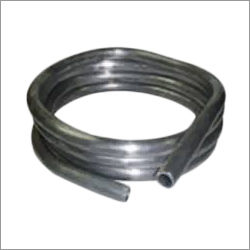
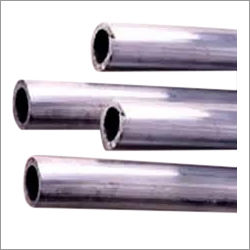
The Lead Pipe is made from pure lead or lead alloy which is fabricated by extrusion. Widely used in chemical industry, it has an excellent property of rust resistance and flexibility. It is offered in different sizes according to the application requirements like Water, Ventilating, Gas Purpose, Telephones, Soil Waste, Acids & Chemicals. Our offered Lead Pipe is widely used in chemical industry for features like rust resistance and flexibility. In order to make sure unmatched quality, these are mad by using pure lead metal under strict surveillance of our professionals.
Unmatched Material Purity and PerformanceFabricated with 99.98% pure lead, our pipes meet stringent IS 2381 and BS EN 12588 standards. This ensures high density and optimum strength, providing superior shielding and longevity in challenging environments. The unpolished, smooth surface contributes to efficient performance across various industrial sectors.
Versatile Applications Across IndustriesOur lead pipes are engineered for diverse applications, including water conveyance, chemical handling, radiation shielding, and cable sheathing. Their resilience against harsh acids and moisture, coupled with customizable dimensions, enables seamless integration into specialized industrial systems.
Precision Manufacturing and Custom SolutionsUsing an advanced extrusion process, each pipe displays excellent mechanical integrity and uniformity. Options such as pipe length (13 meters), thickness (312 mm), and weight (320 kg/meter) allow solutions tailored specifically to project requirements, ensuring reliability and consistency for each application.
FAQs of Lead Pipe:
Q: How are your lead pipes manufactured to maintain high purity and structural consistency?
A: Our lead pipes are produced using a specialized extrusion process, which allows for precise control over dimensions and ensures a smooth, unpolished finish. We use pure lead with a minimum purity of 99.98%, strictly adhering to IS 2381 and BS EN 12588 standards. This results in uniform structural properties and optimal performance in sensitive applications.
Q: What benefits does a smooth, unpolished finish provide for industrial applications?
A: A smooth, unpolished finish reduces internal friction, facilitating safe transport of liquids or shielding materials. The finish also minimizes the risk of contamination, making the pipe suitable for chemical, water conveyance, and radiation shielding applications.
Q: When should I consider using lead pipes in the chemical industry or for radiation shielding?
A: Lead pipes are recommended when you need robust corrosion resistance against acids or moisture, or require high-density material for radiation shielding. Their high purity and density (11.34 g/cm) provide effective protection and durability in such conditions.
Q: Where can these lead pipes be customized and supplied?
A: We are located in India and serve as a distributor, exporter, manufacturer, and supplier. Pipes can be customized in length, weight, and thickness to match specific project requirements and are supplied nationwide as well as to international markets based on request.
Q: What is the typical process for specifying and ordering the correct lead pipe for my project?
A: Customers can specify required dimensions (length, thickness), application needs, and any alloying requirements. Based on these, we provide tailored solutions in accordance with IS 2381/BS EN 12588 or customer-specific standards, ensuring appropriate grade, weight, and mechanical properties.
Q: How does lead pipe contribute to safety and reliability in cable sheathing or water transport?
A: With excellent corrosion resistance and a high melting point (327C), lead pipes safeguard cables against environmental hazards and prevent leakage or contamination during water transport, offering long-term reliability without frequent maintenance.






 Send Inquiry


 Send Inquiry